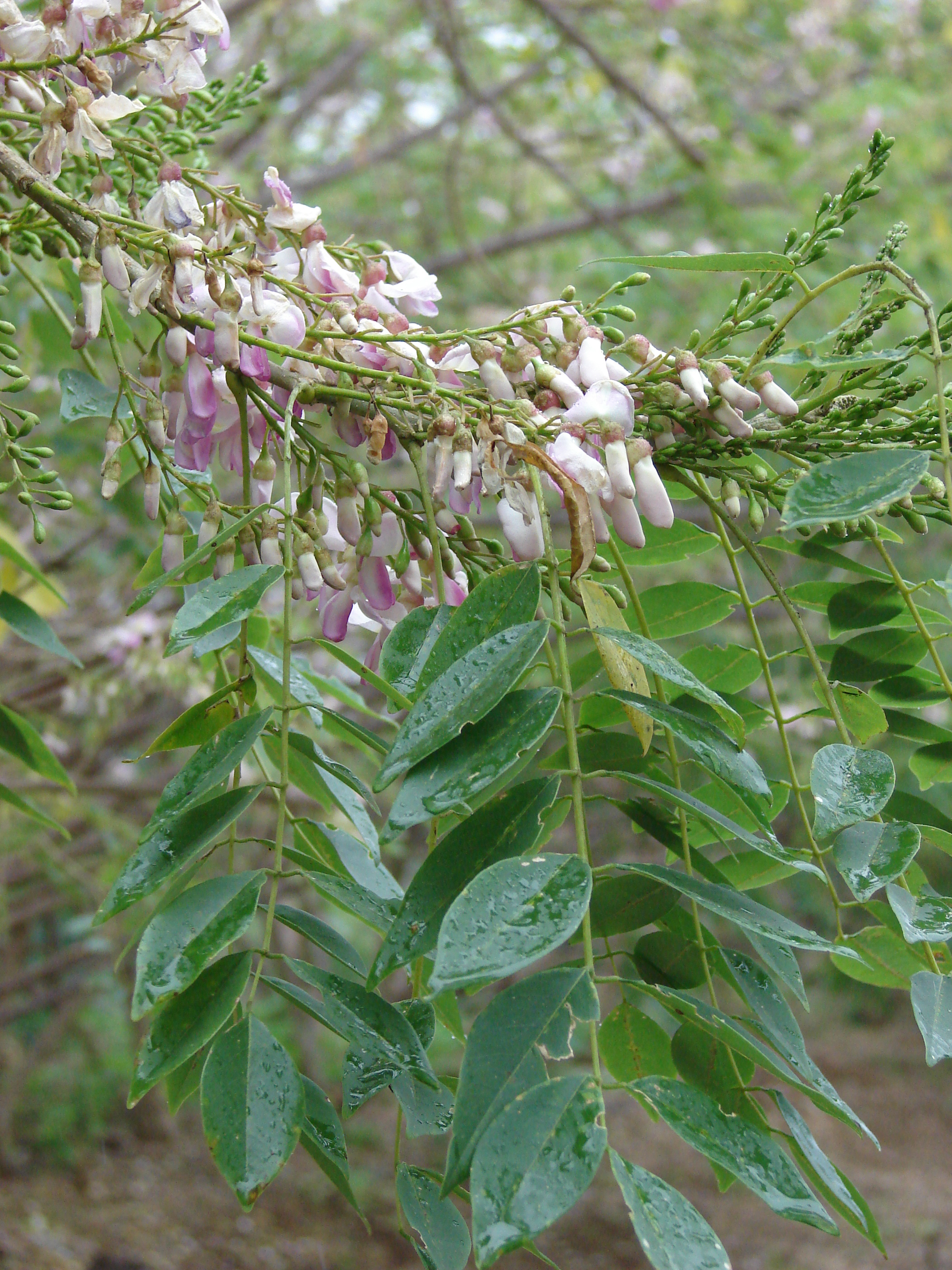
What if the tree growing along your farm boundary could help improve your soil, provide green mulch and protect your field? That is one reason Gliricidia is gaining attention among farmers interested in natural farming.
In natural farming, we often look for ways to make better use of the resources available on our own farms. Instead of treating leaves, twigs and other plant materials as waste, we can return them to the soil and allow nature to recycle nutrients.
Gliricidia is one tree that can support this approach. It can be grown as a live fence along farm boundaries, and its pruned leaves and tender branches can be used as green manure and mulch. Research from the Indian Council of Agricultural Research (ICAR) has documented its potential to supply plant nutrients and support soil conservation. Source: ICAR, Indian Farming.
1. What Is Gliricidia?
Gliricidia (Gliricidia sepium) is a fast-growing leguminous tree used in many tropical farming systems. It is valued for its ability to regrow after pruning and produce substantial amounts of leafy biomass.
Farmers can use it in several ways:
- As a live fence around agricultural land.
- As a source of green leaf manure.
- As organic mulch around fruit trees and other crops.
- As a source of biomass for improving soil health.
- Along field bunds and boundaries as part of an agroforestry system.
Its ability to serve several purposes makes Gliricidia useful for farms where land, water and organic materials must be managed carefully.
2. How Does Gliricidia Help Improve Soil Fertility?
One of Gliricidia's most valuable features is its relationship with nitrogen-fixing bacteria.
As a leguminous tree, Gliricidia can form nodules on its roots in association with compatible bacteria. These bacteria convert atmospheric nitrogen into forms that the plant can use. Some of this nitrogen can eventually enter the farm's nutrient cycle through fallen leaves, pruned branches and decomposing roots.
This process is important because nitrogen is an essential nutrient for plant growth.
But there is an important distinction: Gliricidia does not directly manufacture a complete NPK fertiliser. Its leaves contain nutrients, including nitrogen, phosphorus and potassium, which are returned to the soil as the plant material decomposes. The actual amounts depend on growing conditions and the material used.
Studies have found that Gliricidia biomass can contribute to soil fertility and crop nutrition. Its use may help reduce dependence on purchased fertilisers, although the extent depends on the crop, soil and quantity of biomass available. Research: ICAR.
3. Why Should Farmers Mulch Gliricidia Leaves on the Soil?
In natural farming, the value of Gliricidia is not limited to the living tree. Its pruned leaves and tender branches can become a resource for the soil.
Instead of removing all the pruned material from the farm, farmers can spread suitable material over the soil surface.
As the green biomass decomposes, it releases nutrients and contributes organic matter. Surface mulching can also help reduce direct exposure of the soil to sunlight, moderate soil temperature and reduce moisture loss.
Benefits of Gliricidia mulching
Nutrient recycling: Nutrients stored in leaves and tender branches return to the soil during decomposition.
Soil cover: Mulch protects the soil surface from direct sunlight and the impact of raindrops.
Moisture conservation: A suitable mulch layer can reduce evaporation, helping the soil retain moisture.
Support for soil organisms: Decomposing plant material provides food and habitat for organisms involved in nutrient cycling.
Less waste: Pruned biomass becomes a useful farm resource instead of being discarded.
The results depend on how much biomass is available, the soil's condition, moisture and the rate of decomposition. Mulching is a continuing soil-management practice rather than a one-time solution.
4. Gliricidia as a Living Fence
A farm boundary does not have to consist only of stones, wire or concrete posts. Suitable trees can form a living boundary while also producing useful biomass.
Gliricidia is commonly used for live fencing because it grows quickly and can regrow after pruning. Once established and maintained properly, it can provide a renewable source of leaves and branches.
For a natural farming orchard, a Gliricidia boundary can serve two purposes: defining the farm's perimeter and producing biomass for mulching.
Farmers should plan the planting distance and pruning schedule according to the purpose of the fence, the available space and the crop growing nearby.
It is also important to manage the height and spread of the trees so that the boundary does not create excessive shade or compete unnecessarily with the main crop.
5. How Can Gliricidia Be Used in a Fruit Orchard?
Fruit trees need a healthy root zone, adequate moisture and balanced nutrition. Gliricidia can support orchard management by providing a renewable source of organic mulch.
A practical approach is to prune established Gliricidia trees, collect suitable leaves and tender branches, and spread the material over the soil around the fruit trees.
Keep the mulch away from direct contact with the fruit tree's trunk. Allow sufficient space for airflow around the base and avoid creating conditions that keep the collar continuously wet.
Apply mulch across an appropriate part of the root zone rather than piling everything against the stem. As the material decomposes, replenish the mulch when necessary.
For crops such as Kagzi lime, water management remains essential. Mulching can help conserve moisture, but it does not replace proper irrigation, drainage or monitoring for pests and diseases.
6. Practical Tips for Using Gliricidia in Natural Farming
Farmers who want to use Gliricidia can keep a few principles in mind:
- Plan the boundary first. Choose suitable locations where the trees will not unnecessarily shade the main crop.
- Prune for biomass. Regular, appropriate pruning encourages fresh growth and provides material for mulching.
- Return biomass to the soil. Spread leaves and suitable tender branches where they can decompose without obstructing farm operations.
- Maintain soil cover. Combine Gliricidia mulch with other locally available organic residues when appropriate.
- Watch soil moisture. Mulch conserves water, but irrigation must still match crop requirements and local conditions.
- Observe the results. Look at soil moisture, crop growth, decomposition and the amount of biomass produced before changing your management practices.
Natural farming is not about applying the same method blindly to every field. It is about understanding the farm ecosystem and improving it through observation and consistent management.
7. Can Gliricidia Reduce Dependence on External Inputs?
Gliricidia can help farmers produce some of their own nutrient-rich biomass. When it is integrated into a well-managed farming system, it can contribute to nutrient recycling and soil improvement.
However, its contribution depends on the amount of material produced and returned to the field, the crop's nutrient demand and the existing soil fertility. Farmers should not assume that Gliricidia alone will meet every crop's nutritional needs.
The long-term objective is to make better use of on-farm resources, maintain soil cover, support nutrient cycling and reduce avoidable expenditure where practical.
Conclusion: Grow the Tree, Return the Leaves, Feed the Soil
Gliricidia is more than a boundary tree. With suitable management, it can become a source of green manure, organic mulch and recycled nutrients.
For farmers interested in natural farming, it offers a practical way to connect farm boundaries with soil management. A tree growing along the edge of a field can contribute to the health of the land within it.
At LemonRoots, we believe that healthy farming begins with understanding the soil and making thoughtful use of nature's resources. Sometimes, one of the most valuable resources on a farm is already growing along its boundary.
References and further reading
- ICAR — Gliricidia and resource conservation in the Eastern Ghats
- ICAR — Soil health and crop productivity improvement through Gliricidia green leaf manuring
- Scientific review — Gliricidia applications for enhancing soil fertility
This article is intended for agricultural education. Gliricidia's benefits vary with climate, soil, biomass production and management practices. Farmers should adapt the recommendations to their local conditions.